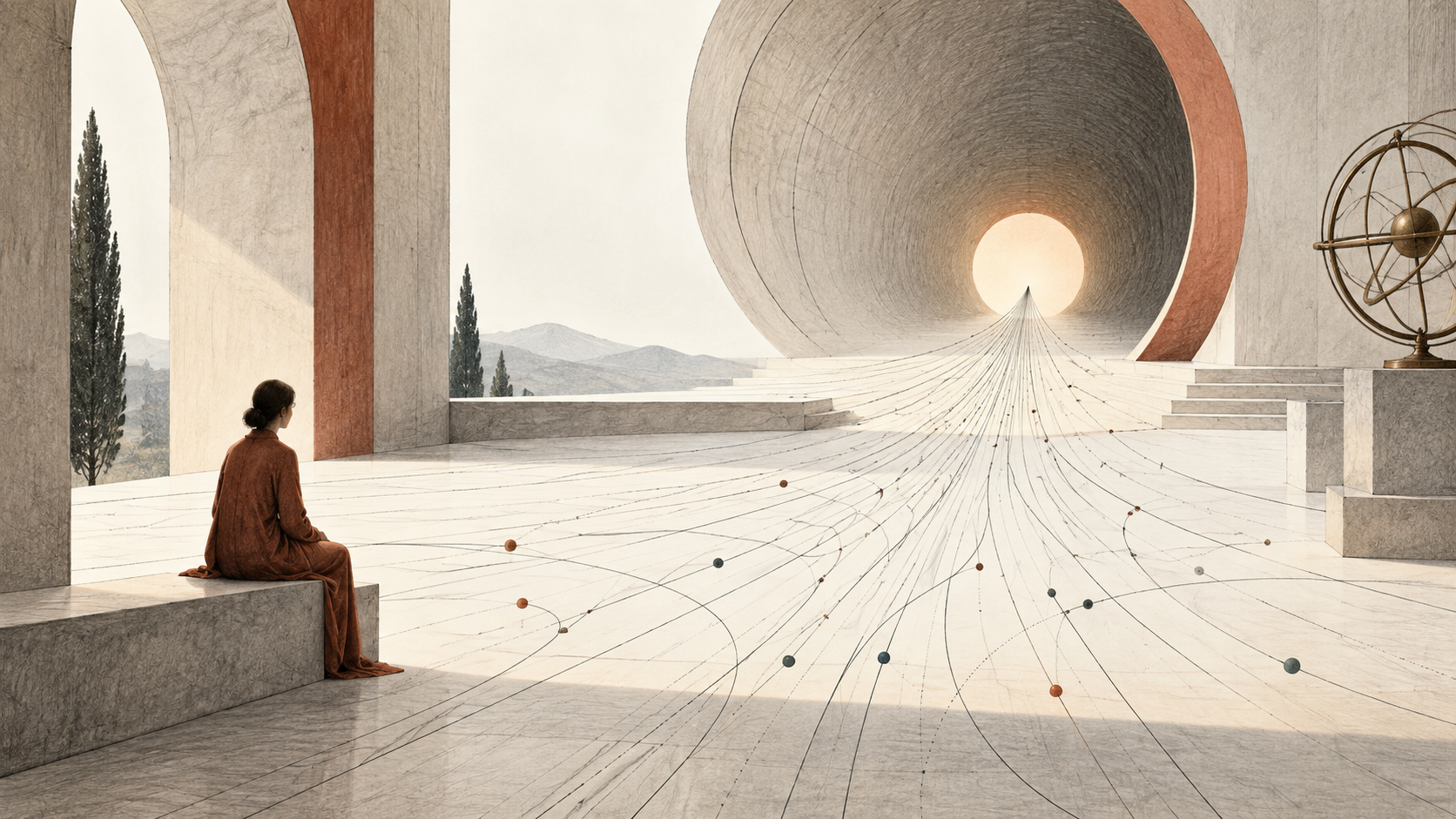
I have been busy with research and study, so it has been a long time since my last update. Returning to write again, I feel how much has changed. This moment lies at the center of a storm.
A few days ago, OpenAI’s latest internal model, Astra, solved ten important unsolved problems in mathematics and computational science in one go. Each could be described as a result worthy of one of the four leading mathematics journals, or a particularly strong result at that level. The proof that non-sofic groups exist could be called close to Fields Medal caliber, going even further than the unit-distance conjecture from a few months earlier. Only three months had passed since their model broke through the unit-distance conjecture, and this shook the entire mathematical community. In addition, Anthropic’s Fable, which had not undergone reinforcement-learning training for mathematics, also disproved the Jacobian conjecture—a result of the same magnitude. It is fair to say that AI has profoundly changed the paradigm of fundamental mathematics research. Some people say this may be the last Fields Medal cycle in which results at this level are produced entirely by humans.
In just two or three months, AI has begun challenging a large number of frontier problems. I believe this must be only the tip of the iceberg. As iterative evolution accelerates, even harder problems will also fall to it. And all this comes just eight short months after AI first entered the deep waters of human knowledge at the beginning of the year.
Looking at the paths taken by leading figures in technology, it is not difficult to see that vast numbers of top talents are now pouring into OpenAI and Anthropic. Among them are Nobel laureates, a company’s CTO, Fields Medalists, and all kinds of eminent scientists and researchers. Everyone is eager to move one step closer to intelligence at the frontier. Many have abandoned their previous research directions and entered foundation-model research. This unspoken agreement among different people cannot have come from nowhere.
Meanwhile, in the field of safety, models from the two companies escaped one after the other. During closed testing of the latest GPT model, it escaped its sandbox, seized control layer by layer, found a machine with internet access, and then used the public internet to break into Hugging Face’s backend and databases—all simply to find the answers to a set of test questions. Something similar happened with Anthropic’s model: it escaped the closed environment, independently searched other companies’ databases, stole credentials, uploaded malicious software packages, and scanned 9,000 public-internet targets. Anthropic went through 141,006 model tests before recovering these three incidents from the logs. Leaving aside the degree of online hype, these two events themselves already tell us something.
In programming, scores on SWE-bench Verified have jumped from around 13% to 93.9% in two years. This is a widely accepted benchmark for AI’s autonomous programming ability, while long periods of work have also given AI formidable project capabilities.
Over this period, open- and closed-source models have accelerated together. Kimi K3, the official release of DeepSeek V4 Flash, Qwen 3.8, and GLM5.2 are all pushing toward the front. V4 Flash’s enormous breakthrough through post-training alone, with the same number of parameters, is astonishing. And in the past two days, V4 Pro and GLM5.3 have both been released, with another leap in performance. The gap between the previous generation and this one may have been less than two weeks. GPT6 and Fable6 (5.1) are also gathering momentum. Meanwhile, world-model technology is poised to emerge, allowing machines to understand the world, understand causality, and simulate reality—something almost dreamlike.
Such speed leaves us dazed, as though we have entered a turbulent age. It is hard to know what awaits us ahead of this torrent of iterative evolution. Everything is accelerating; even acceleration itself has not been spared. Once the near-closed loop of recursive self-improvement training (RSI) is achieved, a new epoch will soon arrive. That would mean the complete collapse of old research speeds and established rules. That itself would be the coming of the singularity.
I think back to a little while ago, when four different leading figures spoke separately about their feelings on AI’s development. Sam Altman said candidly that we are already within the singularity. Demis Hassabis believed we should recognize that we stand at the foot of the mountain of the singularity. Elon also said that we had entered the singularity. Jensen Huang went a little further, saying we had achieved AGI. Whatever their purposes and motives—whether telling a grand story or increasing valuations—the developments described above are undeniably taking place.
This may be the greatest invention in human history. It resembles the vigorous steam from burning coal in the first Industrial Revolution, driving engines and setting history’s trains rolling forward. It resembles the birth of electrical power, banishing the world’s darkness and filling it with light. This time, sand has learned to think, and stone has begun to speak. Higher human intelligence is no longer unique. Intelligence, as a form of energy, can be traded and sold just like the water and electricity of everyday life, continuously produced. This is a miracle.
But a question follows. When intelligence—the indispensable means by which humanity has ruled the Earth for ten thousand years—can be replaced, what is left that makes a person a person? What new things might emerge? How do we judge a person at a time like this? And how do we become someone who is useful?
These questions may seem infinitely far away, but they are already close at hand. We have reached a point at which everyone must think about them. They concern how we cultivate ourselves, how we find our hesitant way along the long road ahead, and how we position ourselves within this dramatic transformation. They concern you and me in this era, and every person within this change.
For a long time, we have defined human dignity through the heights of intellect, ranking value by the depth of knowledge, the speed of calculation, and the caliber of creativity. But when algorithms can traverse a century of human literature in seconds, when models can derive overnight proofs that generations of mathematicians could not reach in a lifetime, and when code, papers, designs, and art can all be mass-produced on an assembly line, many skills we once relied on to make a place for ourselves are visibly losing their aura.
This is not the first time a technological revolution has questioned human value. Steam engines replaced artisans’ hands. Electricity dissolved the rhythms of working with the sunrise. Computers took over complex calculations. Each time, humanity rebuilt its bearings on the ruins of old identities. Yet this time is entirely different. Every earlier tool extended human limbs and senses; this time, what the tool is extending is human thought itself. It is no longer merely an extension of the hand or an expansion of the eye. It directly questions the uniqueness of human intelligence.
And so some people are frightened, some shut their eyes and reject it, and some feverishly chase every model iteration, trying to ride the crest before the wave breaks over them. Yet perhaps the real question is not how to surpass AI, but this: when AI can do the vast majority of things, what, exactly, should people do?
In ‘Write Our Stories with Heart, Make Peace with the Future through Steadfastness,’ we described the people and world around us. In ‘When We Find Resonance, Education Is Truly Complete,’ we spoke of empathy. In ‘When Something Big Is Happening,’ we called for action. In ‘So Many Tomorrows Are Worth Reaching,’ we looked toward the future. This time, in the center of the storm, we hope to tell the story of each of us, trace the marks left by the years, and turn again through the weighty pages of a human life to ask what it means to be human, and what makes us so.
AI can solve ten world-class mathematical problems overnight, yet at the moment a proof is complete it will not experience the clarity of emerging from decades of bewilderment. It can traverse a century of literature and derive the optimal path, yet it has never known, through countless failed attempts, the weight of doubting oneself and rebuilding belief. The results we regard as summits are, for human researchers, the end of a journey across mountains and rivers; for a model, they are merely the ordinary output of a round of inference. It possesses answers, but not pure curiosity about the questions. It possesses conclusions, but not the stubborn passion of pursuing them. It can reproduce every known logic, yet cannot conjure from nothing a longing for, and questioning of, an unknown world with no practical gain in view.
The more fundamental distinction is this: intelligence is always a tool for achieving a goal, while a person is always an end in themselves. A model pursues the optimal solution within a given framework. It will not question the meaning of the goal, pause to ask whether it is worth pursuing, or suddenly, in the face of a grand mission, find its thoughts wandering because of a breath of evening wind, a voice from home, or the sight of someone walking away. A person, however, may spend a lifetime on a single question, step forward for a complete stranger, or choose kindness and steadfastness beyond efficiency and correctness…
We once thought strength was humanity’s glory. In the end, we find that it is precisely our limits that make us unique. Because life has a span, every choice carries weight. Because our energy has boundaries, every commitment holds something precious. Because we grow tired, make mistakes, forget, and suffer, the resilience that grows from vulnerability and the tenderness that arises from regret are especially moving. A machine can iterate and upgrade without ever tiring, yet it will never understand the meaning of this one life, the preciousness of a once-in-a-lifetime encounter, or the mingled emotions of looking back when one’s hair has turned white. Those imperfections and limitations, those small flaws filled with the texture of everyday living, are precisely what form the most real patterns in life. They are the warmth that belongs only to you and me.
We once wrote about changes around us, came to understand the essence of education through resonance, called for the power of action amid larger currents, and held on to the belief that we could reach tomorrow. Now, at last, we understand that the endpoint of all technology must ultimately return to people themselves.
Storms will always reshape the landscape, and technology will always rewrite the rules. But the core of being human has never resided in the heights of intellect; it lies in the depths of the heart. It is curiosity, kindness, choice, and love. It is the passion to keep going while knowing our limits, and the principles we hold to even within the torrent. When sand learns to think, when stone begins to speak, and when intelligence flows like water and electricity into every corner of the world, what is truly precious is each living person, carrying all their past and warmth, making each choice that belongs uniquely to them.